
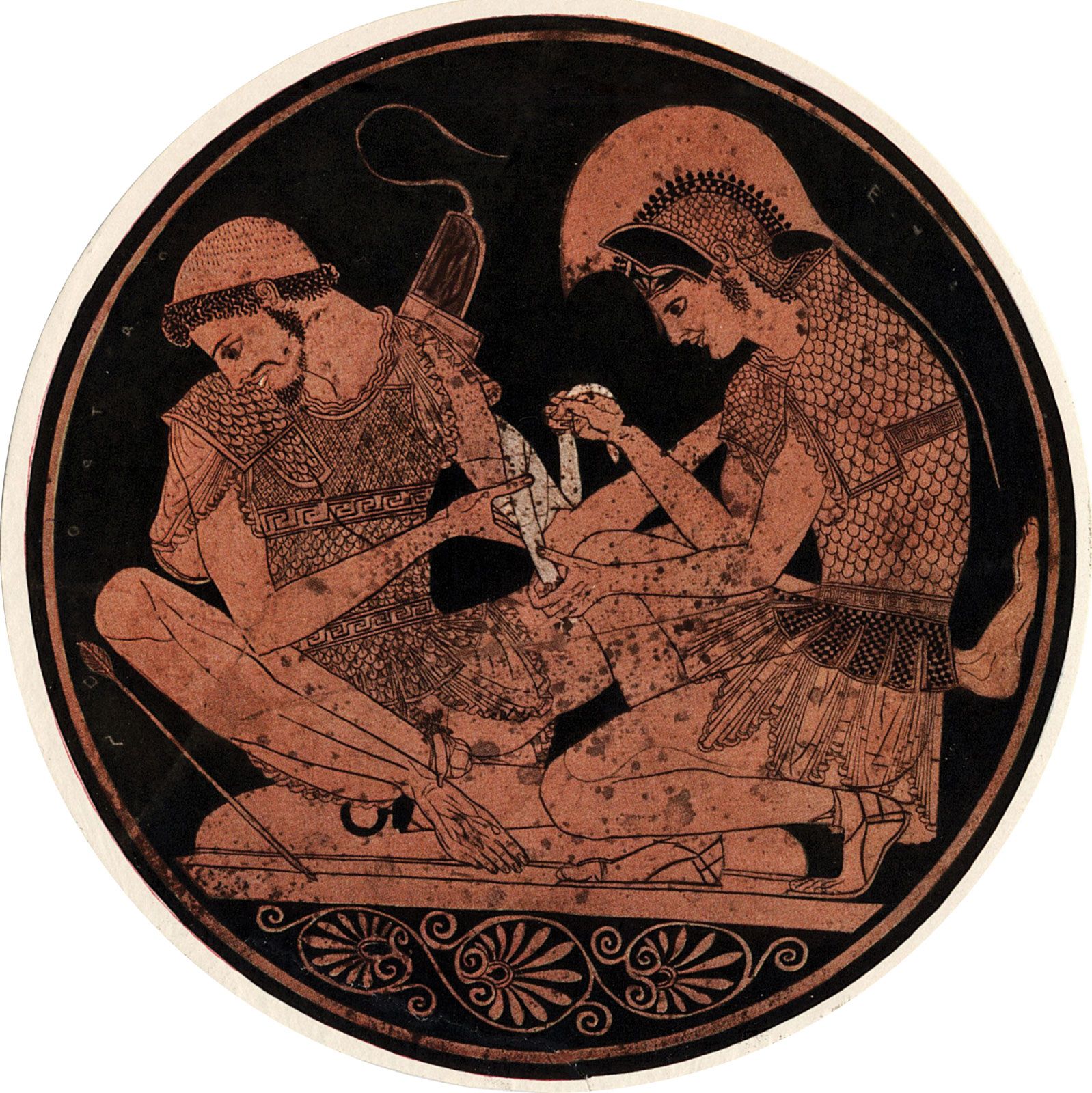
I first read The Iliad from a used English translation pillaged from the Saturday morning book bizarre in Taksim Square in Istanbul in 2002. I had left India a few weeks before after a severe bout of malaria that almost killed me, and after the mad, chaotic, cow-ridden streets of Delhi unruly Istanbul seemed to me the seat of good order and government. Advised by my doctors to stay out of the heat I spent a week in my air-conditioned room in a hotel in the Sultanahmet reading Homer’s epic poem. I had read The Odyssey in college and liked it, but I was unprepared for The Iliad and the effect it would have on my life. I’ve often said to friends that our greatest reading experiences come not just from the books we read but the times at which we read them. After my near-death experience in India I was ripe for Homer’s most faithful lesson: that we are impermanent, and everything is more beautiful because we are doomed.
Once fully recovered from my illness I decided to drive to Truva, the Turkish name for Troy and the excavated site on Turkey’s Aegean coast that has long been considered the site of Homer’s legendary city. Fearlessly I raced the back roads of the Turkish countryside in a rented blue Citroën, with an international licence and a road map purchased in the Sultanahmet that was frequently wrong. I often got lost, and received at gas stations and road-side cafes wildly divergent directions by smiling, well-meaning Turks. In Ankara I stopped at a public bath, where a butch Turkish masseur, in a scene straight out of a queer porn movie, offered to have sex with me. I didn’t know it then, but I was in the prime of my life—young, privileged, and free of the constraints that would later be thrust upon me by work, my family and, like Homer’s fame-seeking heroes, my endless, restless hunt for literary distinction.
I arrived in Troy after midnight and rented a room in a near-by tourist hotel. Too excited to wait for morning, I drove to the ruins with the paperback copy of The Iliad on the passenger seat beside me. If you know nothing of Homer, Troy seems at first little more than a dusty pile of rocks. Yet over the millennia many cities have stood there, each numbered by archaeological era. The Troy of Homer fame is archaeological number VII (1300-950 BC.) The site is located on the important trade route of the Dardanelles between the Aegean and the Black Sea and for this reason was inhabited from the time of the Hittites up to the emperor Justinian. Homeric Troy grew rich exacting trade tariffs, and collecting fees as ships and sailors waited in the straight for tail winds to speed them back across the Mediterranean. It has been suggested by historians not taken in by the story of Helen that it was the lucrative trade routes the Mycenaean Greeks were after when they attacked the city, and not the retrieval of the face that launched a thousand ships. The excavation site was surprisingly small—about the size of your average baseball diamond. [Since then more than 75 additional acres of ruins have been excavated indicating that Troy VII may have contained upwards of 7500 inhabitants and was much larger than originally thought when German treasure-hunter Heinrich Schliemann first excavated it in 1870.]
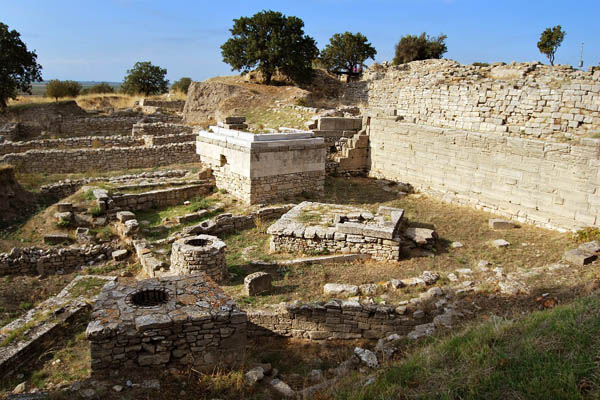
In the late 20th century when Troy came to its final, and slightly more ignominious, designation as a UNESCO world heritage site, the Turkish government in response to complaints by American and British tourists that there was little to see built a twenty-five-foot high wooden “Trojan” horse on the property. When I arrived the site was closed and brooding in the dark beside it was the monstrous wooden horse—a monument to the mounting imbecility of the West through not least of all the erosion of our historical sensibilities. Nothing was fenced or guarded. Perhaps the Turkish government figured that if the tourists couldn’t be bothered the vandals wouldn’t be either. I parked the Citroën in the empty parking lot next to the glass-calm harbour and with a full moon as my accomplice snuck into the ancient city. I stood for a time at the base of the crumbling circular steps of the tiny Odeon theatre now gilded with moonlight, then climbed a ladder into the hollow guts of the horse to stare out through an opening cut into its flank onto the moon-splashed ruins of what remained of ancient Troy. It was easy, even in the belly of the corny wooden horse, to imagine the dark harbour thick with Mycenaean ships and flaccid sails. Struck with wonder for a by-gone age it was Tennyson, not Homer, that came to mind: Myself not least, but honour’d of them all/ And drunk delight of battle with my peers/Far on the ringing plains of windy Troy.
The philosopher Ken Wilbur in his book A Theory of Everything breaks societies into seven types of evolved consciousness which he designates by colour. The highest level consciousness is green—the pluralistic, democratic society so readily being rejected in the west today. Wilbur’s purple level —animistic/magical—belongs to the ancient society Homer describes in The Iliad. The bearers of the purple consciousness are brutishly tribal, xenophobic, superstitious, intolerant, violent and war-like. And yet those same blood-thirsty brutes can turn just as quick into soft and gorgeous weepers, full of love and compassion and according to Homer stamped so deeply with a thirst for God and immortality that their hearts constantly ache with it.
Next to the open window in the horse I randomly opened the The Iliad and read aloud by moonlight Phoenix’s lament in Book IX over Achilles refusal to fight.
‘If you do intend to sail, great Achilles, so great the anger that possesses you, and refuse to save the ships from a fiery end, how can I stay alone, dear child, without you? Peleus, that aged horseman, sent me with you, that day you went from Pythia to join Agamemnon. A child you were, ignorant of war’s evils and the assembly where men find fame. That was why he made me your guardian, to teach you how to speak and act.
And, loving you with all my heart, I formed you as you are, divine Achilles: you would refuse to feast in the hall or eat till I set you on my knee, filling your mouth with savoury titbits, touching the cup to your lips. And, child that you were, you would spatter my chest with wine and soak my tunic. But I suffered much for you and took great trouble, believing the gods would no longer send me a son of my own. I treated you as my son, divine Achilles, in hope that you might save me from some wretched fate.
The Iliad is as a record of the majesty and glory of a long-gone magical/animistic purple age. I think we’re meant to live, like the ancient Greeks and Trojans, in a world of talismanic power and spirit, and in our world of wonders be as deeply heroic as we are tragically flawed. I was at that time in my life in my own mythic, heroic age, and in resurrecting the doomed voices of The Iliad in the hollow chamber of the horse I was perhaps unconsciously lamenting my own mortality and the impending loss of my youth. I found myself briefly in that symbolic meaningful world of purple animism and magic. Perhaps green consciousness is fading because despite all its economic and social advantages it doesn’t offer us that.
I don’t think I will ever be more beautiful than I was that night reading Homer’s words aloud in the belly of the Trojan horse, or having sex with the strong Turkish masseur on the cool marble floor in the steamy massage room of the Turkish bath. We of the green have never learned Homer’s lesson despite how widely he is read and lauded. We can be as intolerant as Homer’s heroes in the name of preserving what we percieve as freedom. We wage war—cultural and actual—on anyone who doesn’t agree with us. We go on insisting that our kingdoms too will not one day be a pile of rocks. I am 57 now, and no longer the desperate-for-adventure young man I used to be. I still long sometimes for the reckless optimism of that young man, and grieve him, even as I still sometimes fantasize about the Turkish masseur in Ankara. But despite the loss, and many repeated and painful lessons in impermanence, I have never given up trying to find a hollow place in which to read aloud the ancient sacred words. I don’t travel much anymore. Even adventure can become rote and uninspired after a while. My wooden horse these days is a small apartment in Toronto—my chosen Troy—with a word processor to write upon, and a shelf for my favourite books. I still often read The Iliad and Phoenix’s speech for us to rally even in the face of our inevitable doom. I still turn occasionally to Homer to rescue me, to rescue all of us, from our own wretched fate.


 darrengreer
Leave a comment