
Not everybody likes art. Whenever one of my high school teachers would defy school curriculum (practically nothing about art was taught in my high school) and show us art my classmates would claim to hate it. Old art was boring, they said. New art was scribbles or confusing or something even a child could do.
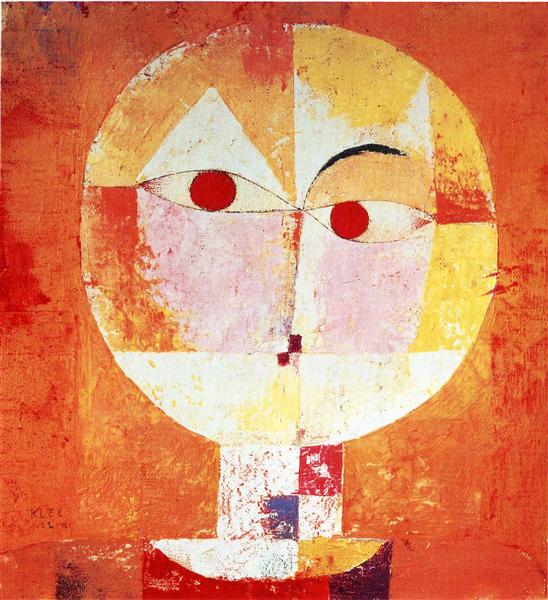
Paul Klee Senecio (1922) Oil on canvas, 48 cm x 63 cm, Kunstmuseum Basel, Switzerland
That being said, and high school critics aside, I never met a person who didn’t appreciate light art when they saw it. Humankind’s fascination with light stretches back to our ancestors’ obsession with the warmth-giving light of the sun, or the ghostly majesty of the moon. Even the staunchest hater of art, or those most indifferent to it, will, when I show them the works of Dan Flavin or Angela Bullock (included below), usually agree that it is lovely. I might even have drawn a casual “neat” from my former high school classmates.
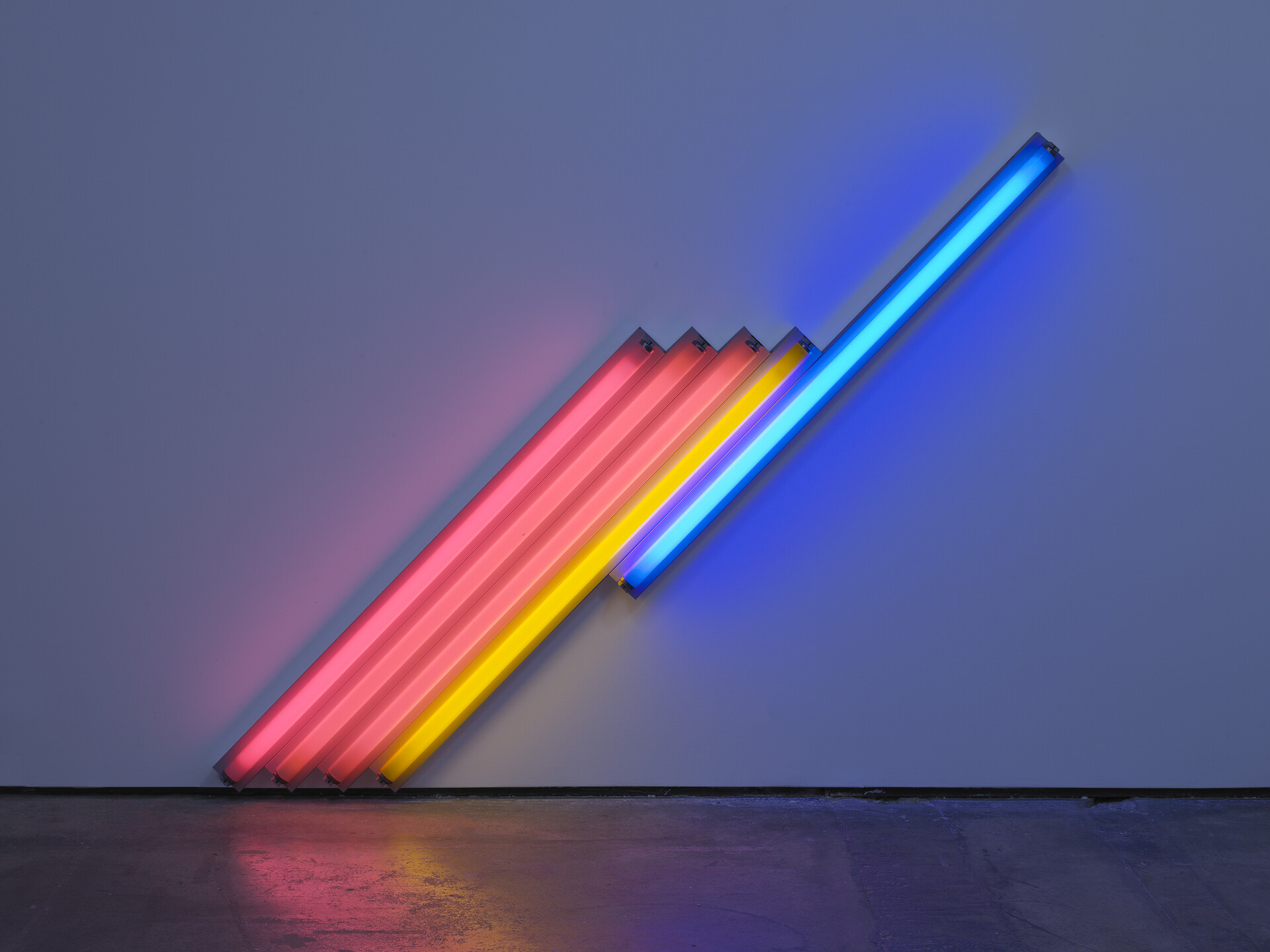
Dan Flavin, Untitled (for Frederika and Ian) (1987) Pink, yellow, and blue fluorescent light, 183 cm long on the diagonal, Guggenheim, New York
That’s because light art is meant to be beautiful, or even when this is not the primary objective of the artist, it is often still visually arresting. This blog post is devoted to those pieces of light art I find most lovely. So this exercise is truly is ‘art for art’s sake’ and we need know nothing about the artist to appreciate the art (although I have included some information about the pieces and the artists showcased here.)
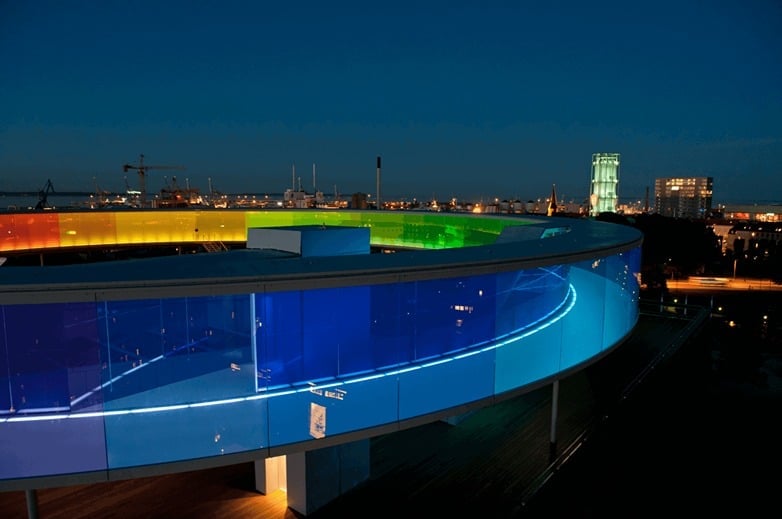
Olafur Eliasson, Your Rainbow Panorama (2017) Aros Museum, Denmark
What is Light Art?
But what exactly is light art? Light Art or the Art of Light generally refers to a visual art form in which physical light is the main medium of creation [Wikipedia contributors, 2024]. Since light is the medium for all visual perception, all visual art could be considered light art in some way [Wikipedia contributors, 2024] and I have taken that to heart and included pieces where light is present in the art but not necessarily dominant. I’ve called this post lux technica: “lux” being latin for “light” and “technica” latin for technique, or creation.
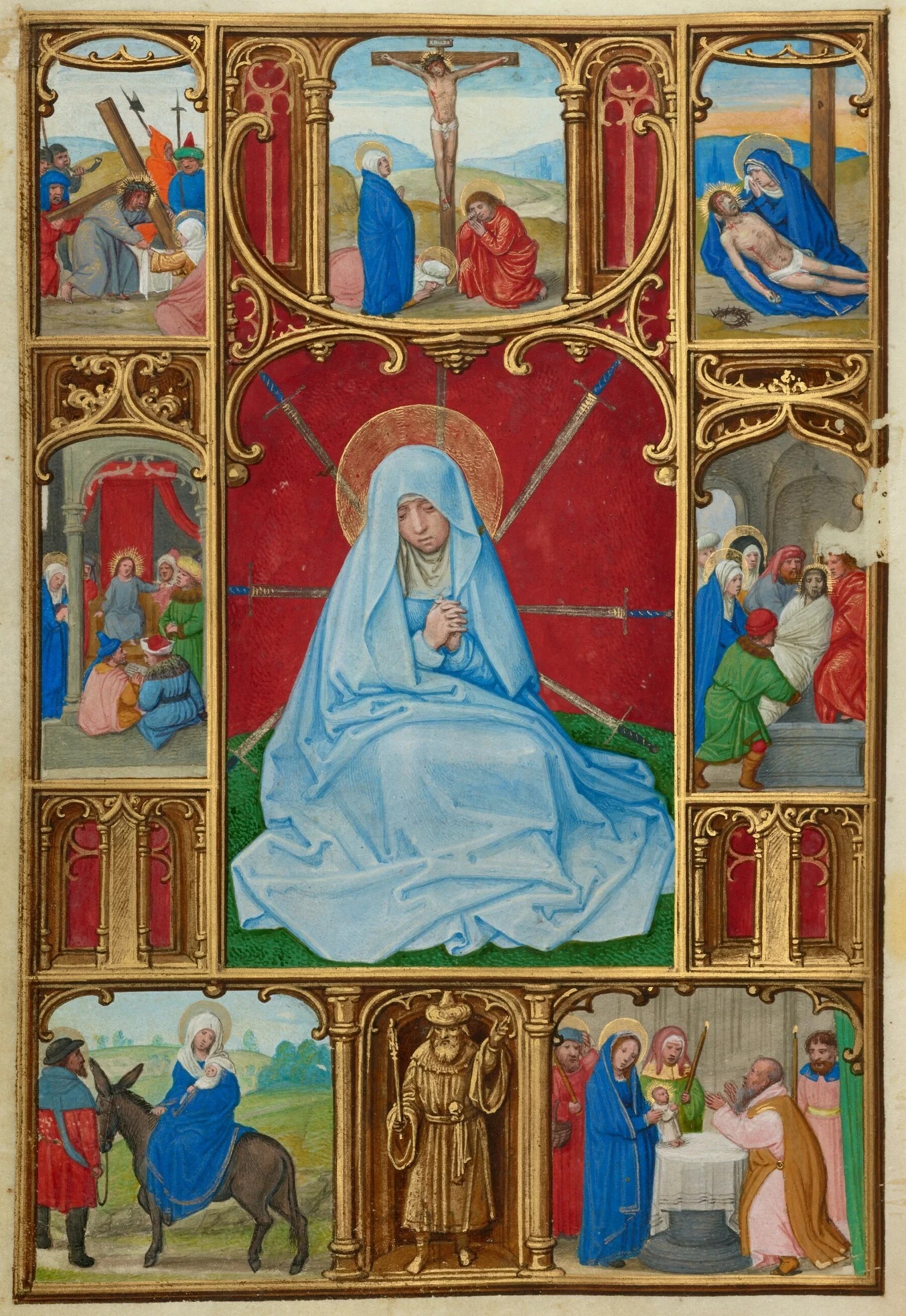
Simon Bening. The Seven Sorrows of the Virgin, from Prayer Book of Cardinal Albrecht of Brandenbur (about 1525-1530) Tempera colors, gold paint, and gold leaf on parchment, Getty Museum
For example the halo painted above the Virgin Mother’s head (above) was a specific portrayal of light common in the Middle Ages to indicate divinity or blessedness, a convention with continued up until the Renaissance [Wikipedia contributors, 2025] and beyond.
Light as the divine energy of the halo appears also in other cultures, such as this drawing of Hanuman, the Hindu “Monkey” god.
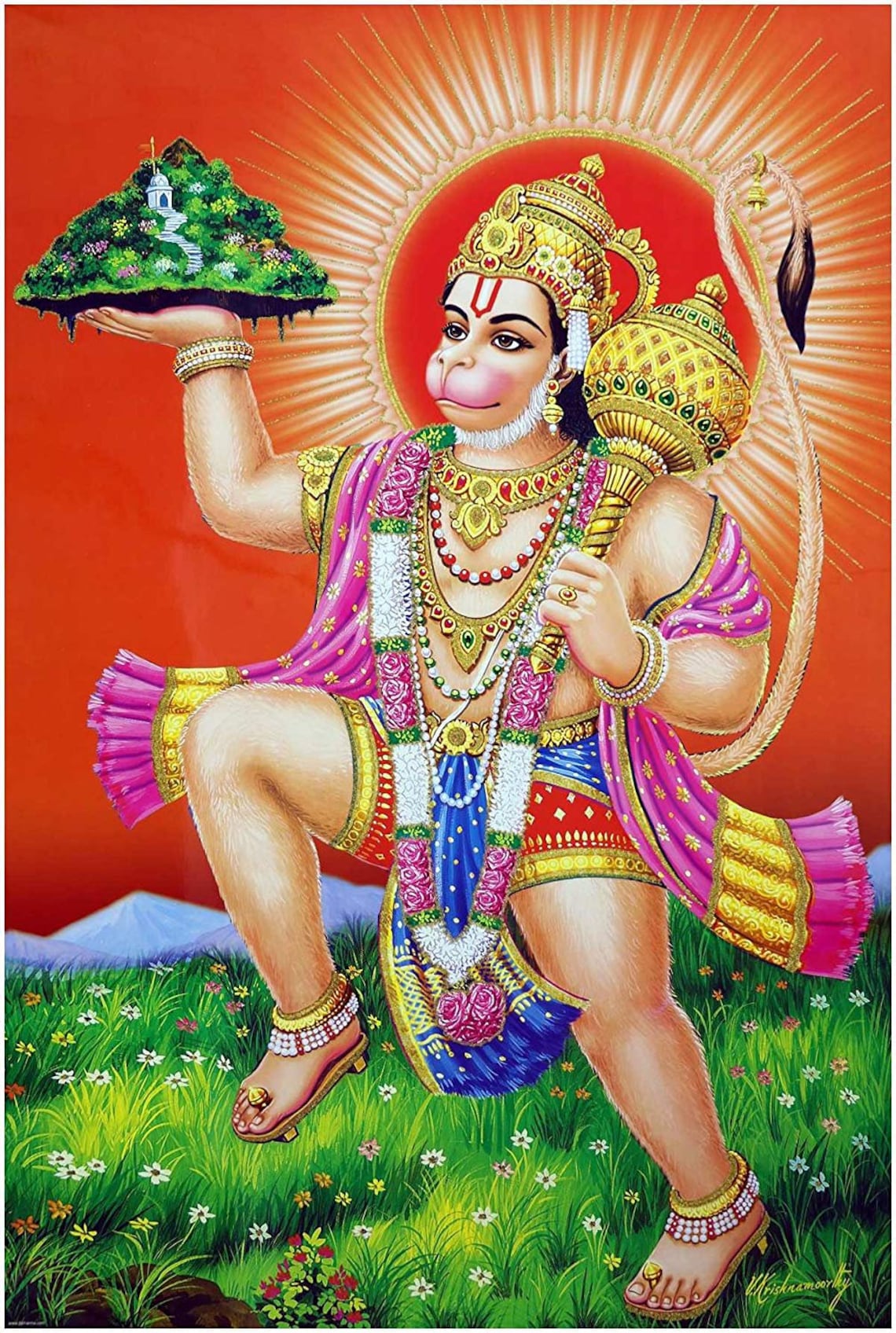
Hanuman With Parvat, (2015) Poster With Golden Art Zari Work, 44 X 66 cm, digitally rendered
Light in Classic Western (European) Art
In the history of Western art many movements can be defined by their use of light that exemplify the period itself. Consider this Fragonard painting of the Rococo [mid 18th century][Wikipedia contributors, 2025] period.
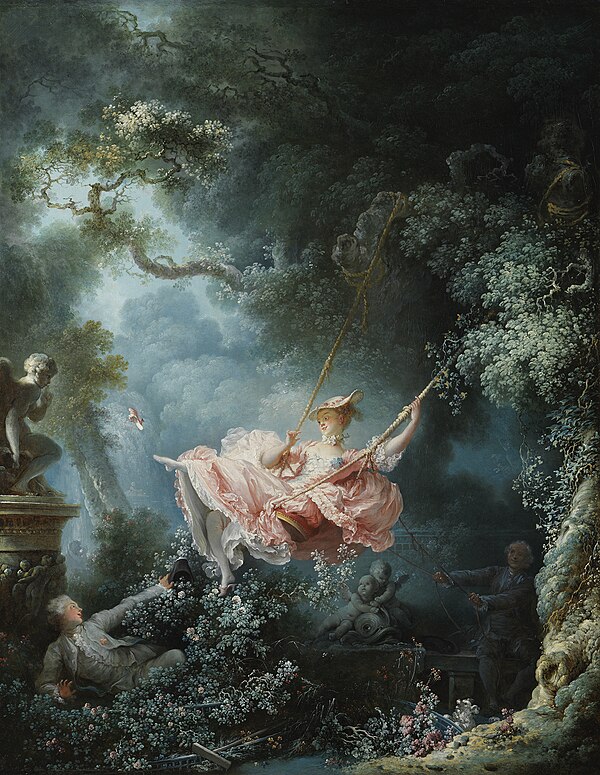
Jean-Honoré Fragonard, The Swing, (1767) oil on canvas, 81 x 64 cm, Wallace Collection, London
Light and colour in the forest behind the woman in the swing is painted resplendent green with dappled sunlight to portray nature as fanciful, lush and decadent. Here light is transformed from its divine role in the Middle Ages to an accoutrement of the French upper classes, which less than half a century later during the French Revolution would be condemned as frivolous and decadent and elitist. [Neo-classicism and the French Revolution, n.d.].
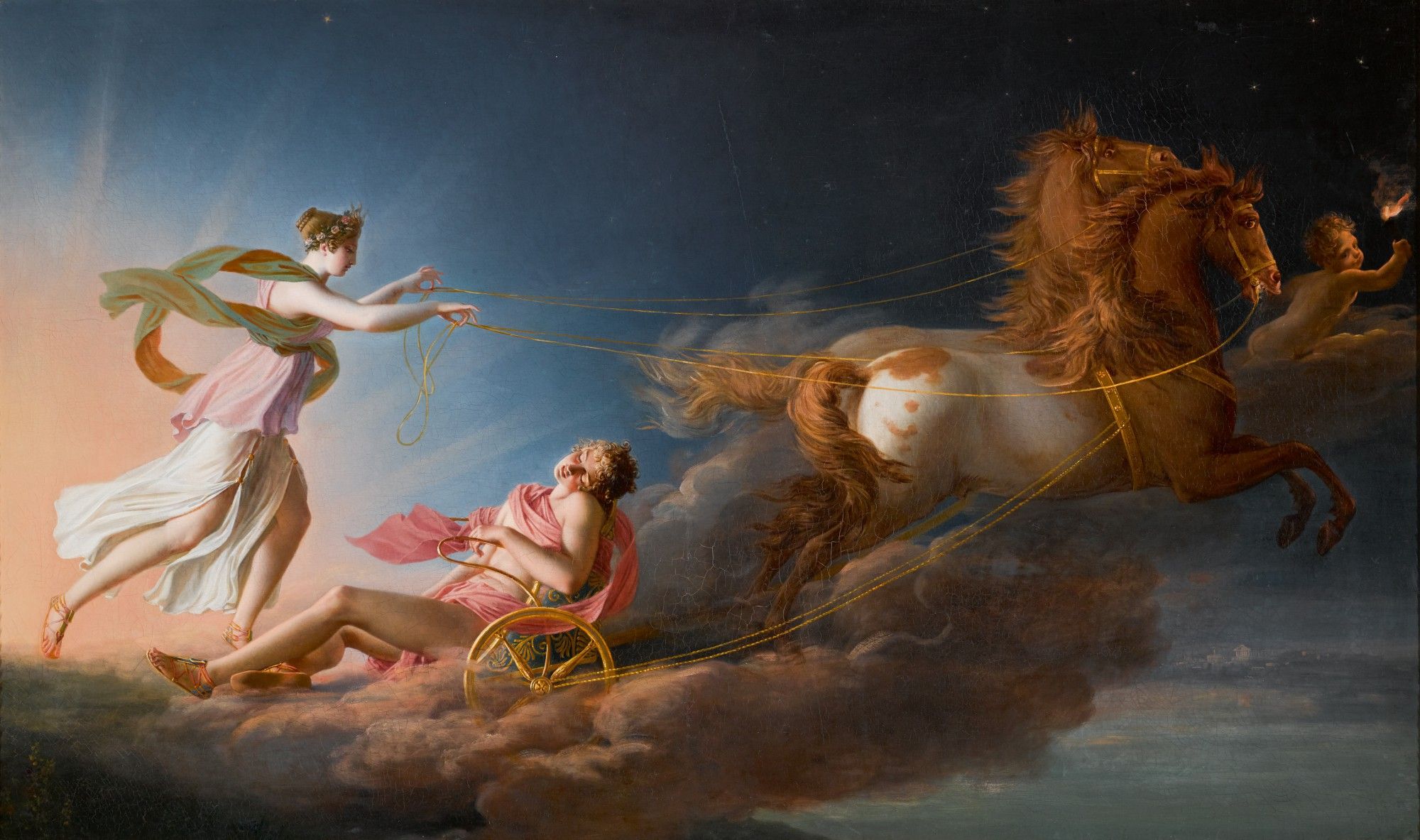
Neoclassical French School, Aurora and Cephalus (1810) oil on canvas, 81.78 x 152.15 cm, private collection
The French Neoclassicists (1795-1850) also created their own form of light art, with bright colours, spectacularly lit backgrounds, and art that turned away from the mystical Middle Ages and the decadent aristocracy of the Rococo. Light still prevails, though the divinity of the halo and the divine is now in the service of politics and the French Revolution [Neo-classicism and the French Revolution, n.d.].
The revolution and neoclassical art coincided, of course, with the French Enlightenment—a political movement where the concept of light was employed to suggest a great intellectual flowering of humankind. There is a philosophical association in the Enlightenment [Wikipedia contributors, 2025] and neo-classicist art with the bringing of light—not from the gods, but rather rescuing Europe from the Dark Ages of religious and monarchical oppression, toward the life-giving light of the new French Republic [Wikipedia contributors, 2025].
The Ascendancy of Light (Impressionism)
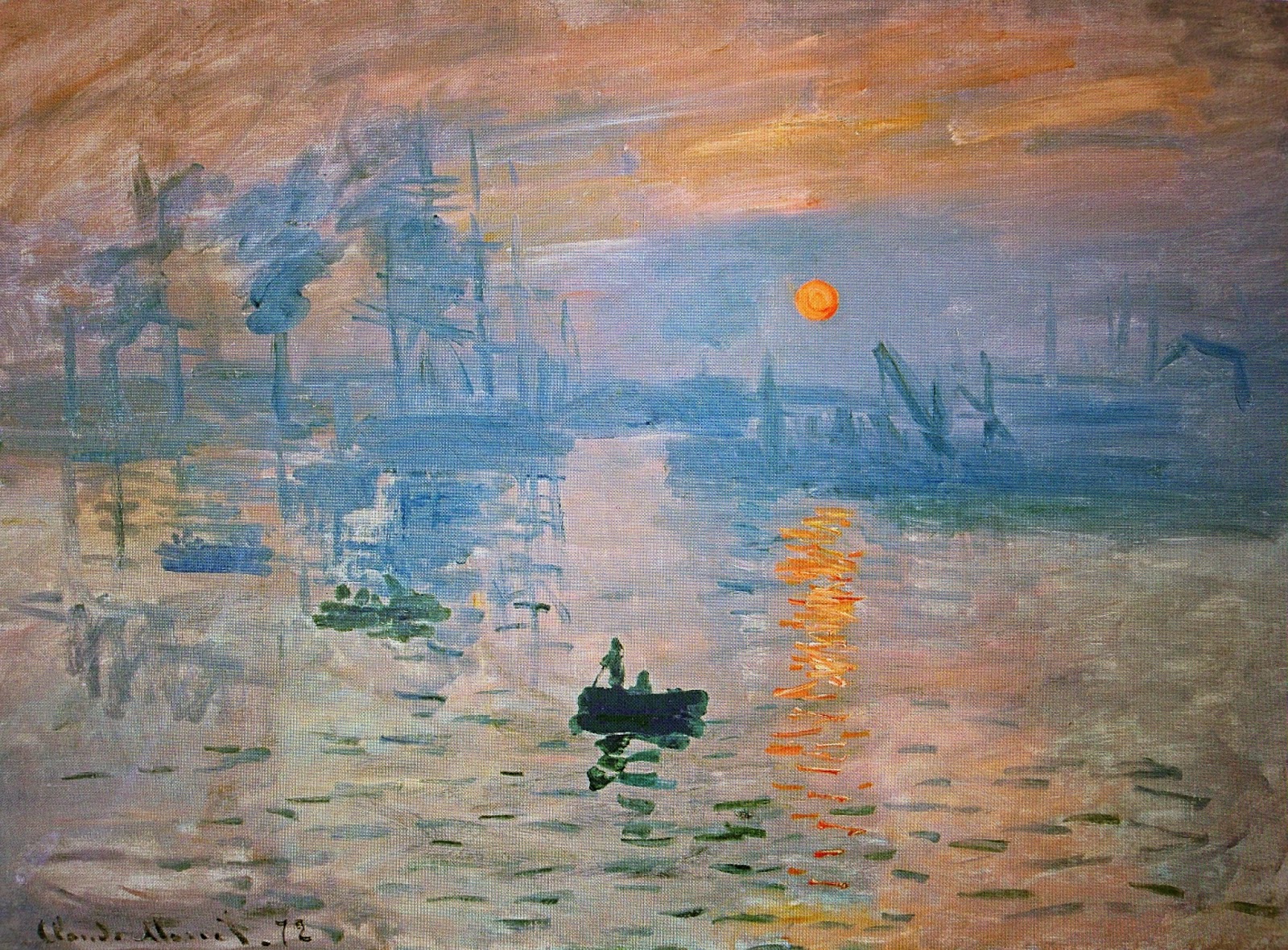
Claude Monet Impression: Sunrise (1892) Oil on canvas, 48 cm x 63 cm, Musee Dorsay Paris
Impressionism is one of the most well-known art movements in the world [19th century] [Wikipedia contributors, 2025] and one of its hallmarks was the deliberate portrayal of the impressions of light itself. Monet’s depiction of light in the painting above comes at the expense of realistic figures and foregrounds which would lead the way to abstraction and expressionist works in the modern and post-modern period, where light was often represented in pure colour.
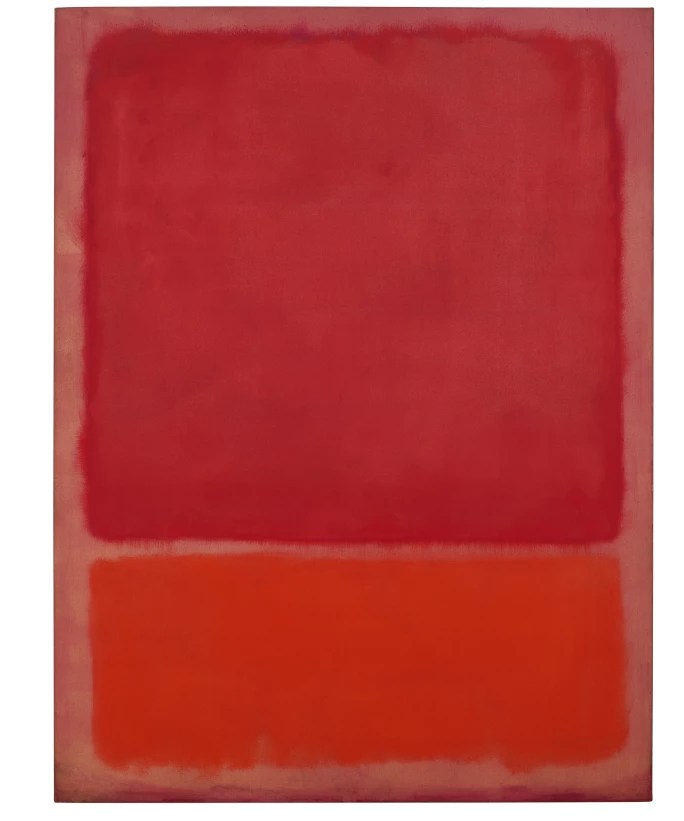
Mark Rothko, Untitled (Rot, Orange) (1968) oil on canvas, 233 x 176 cm, Beyeler Collection.
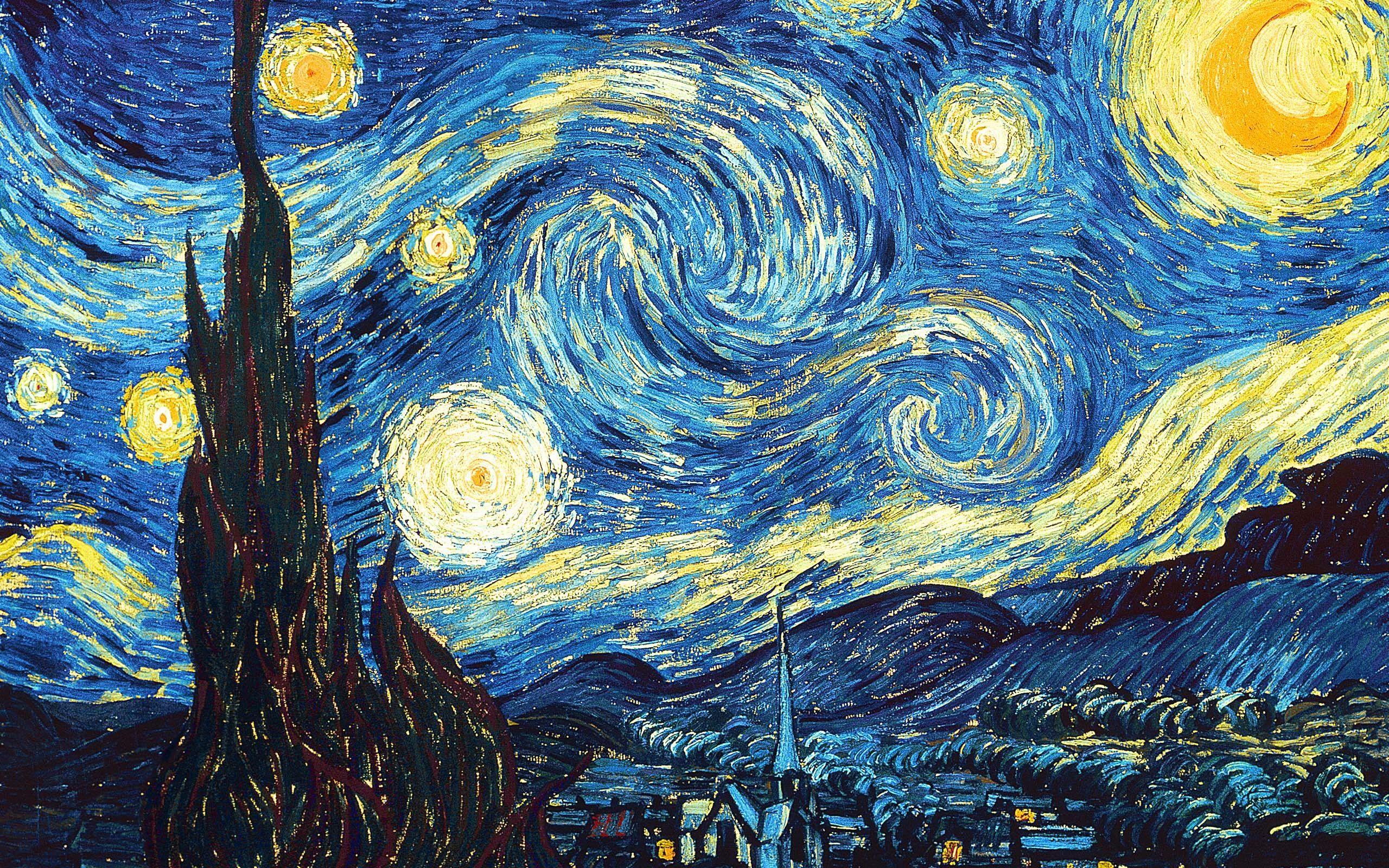
Vincent van Gogh, Starry Starry Night (1889) oil on canvas, 73.7 x 92.1 cm, MOMA, New York
And of course, we must not forget Vincent van Gogh [1853-1890][Wikipedia contributors, 2025]. The way that van Gogh saw and painted light—particularly in Starry, Starry Night (above)—has made him one of the most famous light artists ever to live.
Light Festivals
The human fascination with light is not limited to artists or art. Each year all over the globe many light festivals are held.
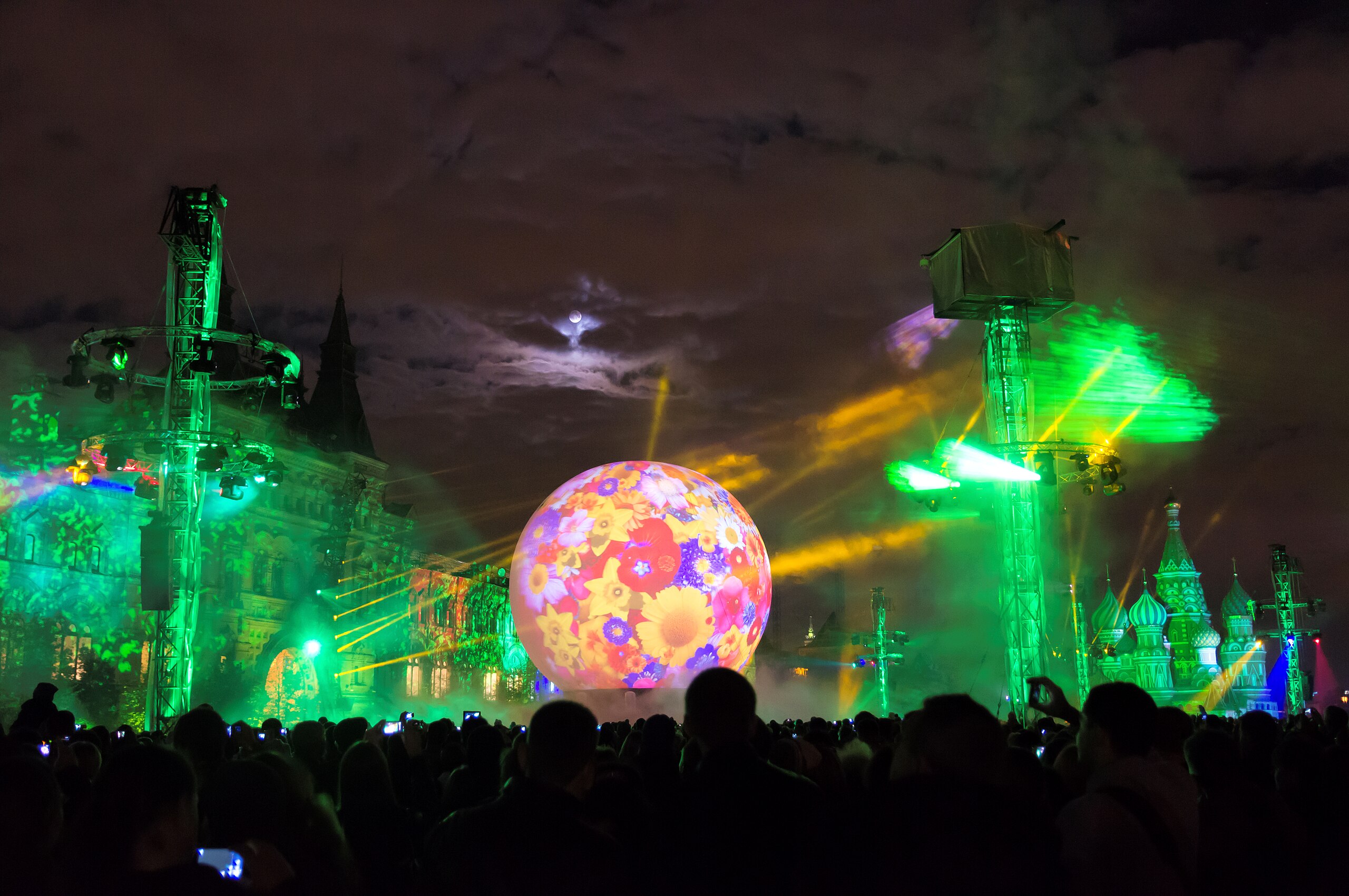
Light Festival Red Square Russia (2022) [admin_gid, 2021]
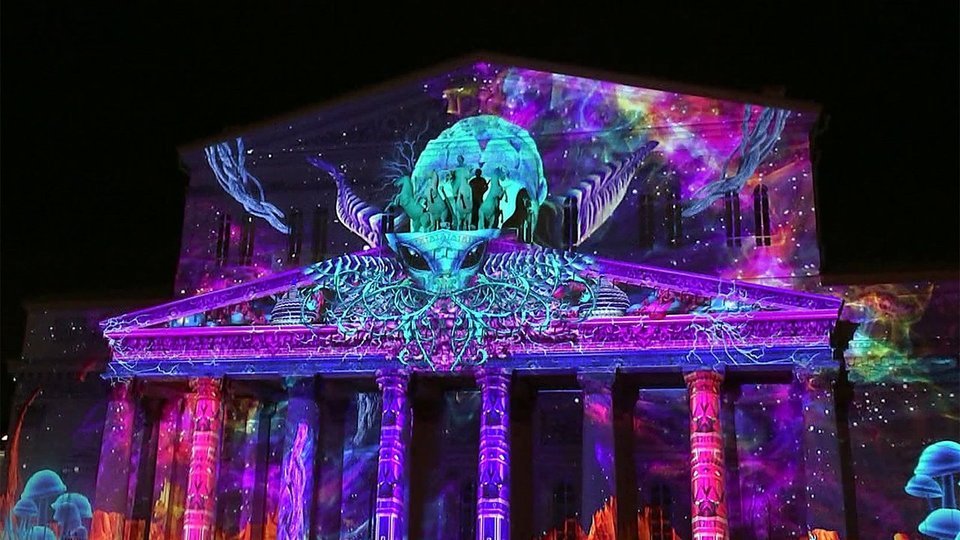
Light Festival Red Square Russia (2022) [admin_gid, 2021]
One of the best known light festivals in the world is created by the Italian Art Collective De Cagna Luminarie whose teams of light artists temporarily decorate ancient churches with neon. These creations combine architecture, light art and the allegorical divinity of light from previous periods into arresting art works that can be found all over Europe and elsewhere.
Below are images of churches decorated and photographed over the years by The Cagna Luminarie Collective [De Cagna Luminarie, n.d.]
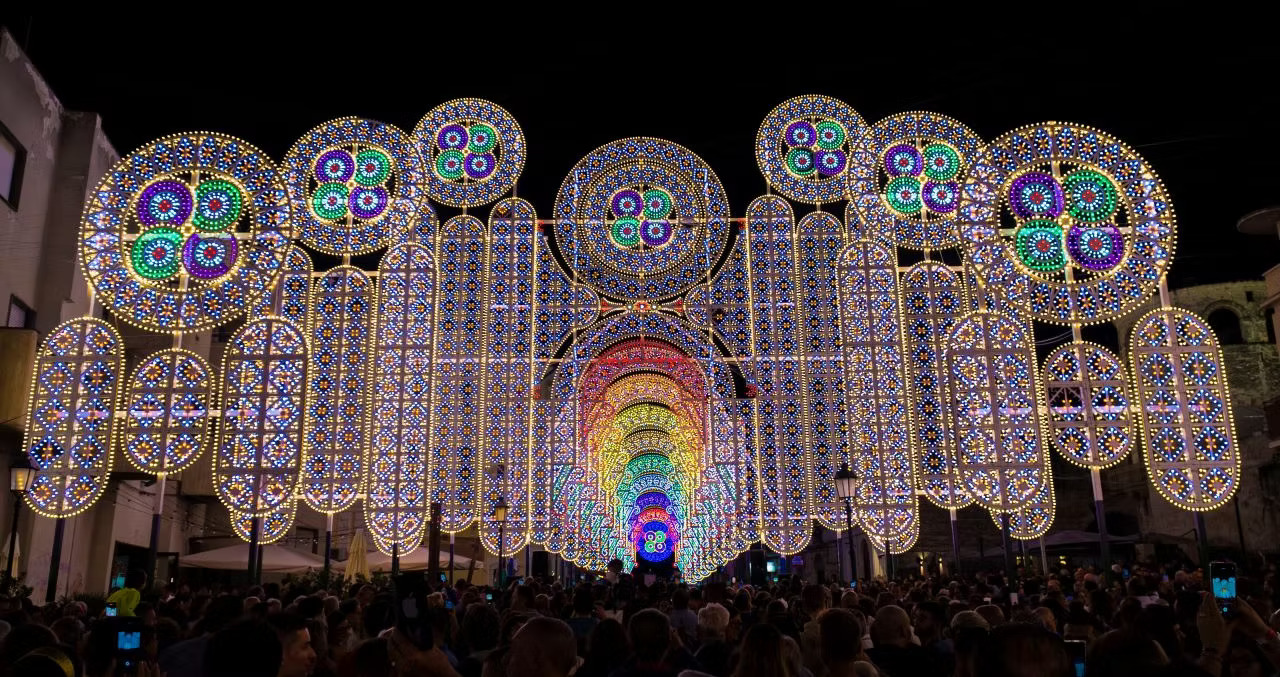
Rutigliano (SS Crocifisso) [De Cagna Luminarie, n.d.]
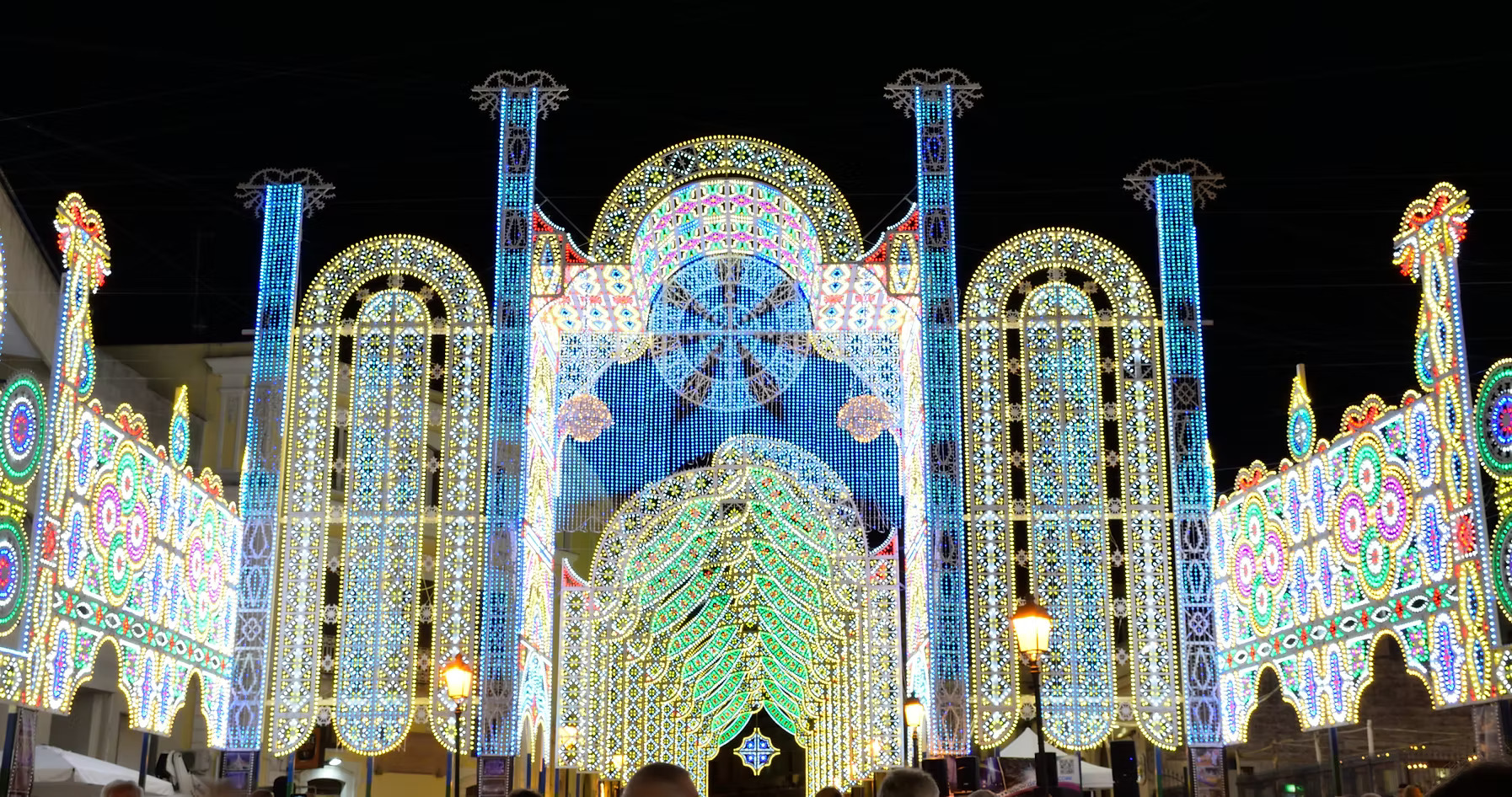
Rutigliano (Ba) SS Crocifisso [De Cagna Luminarie, n.d.]
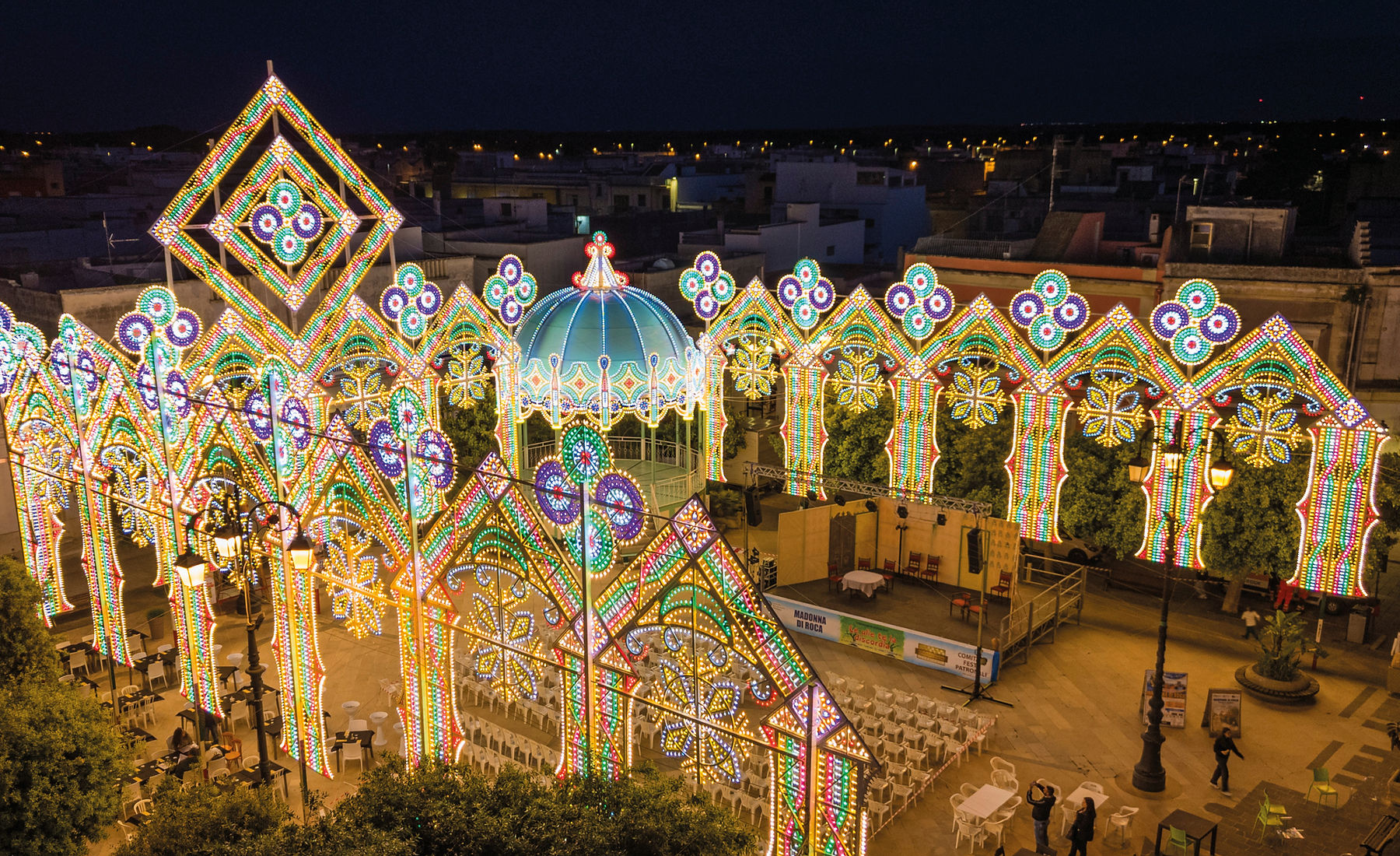
Melendugno, Madonna di Roca [De Cagna Luminarie, n.d.]
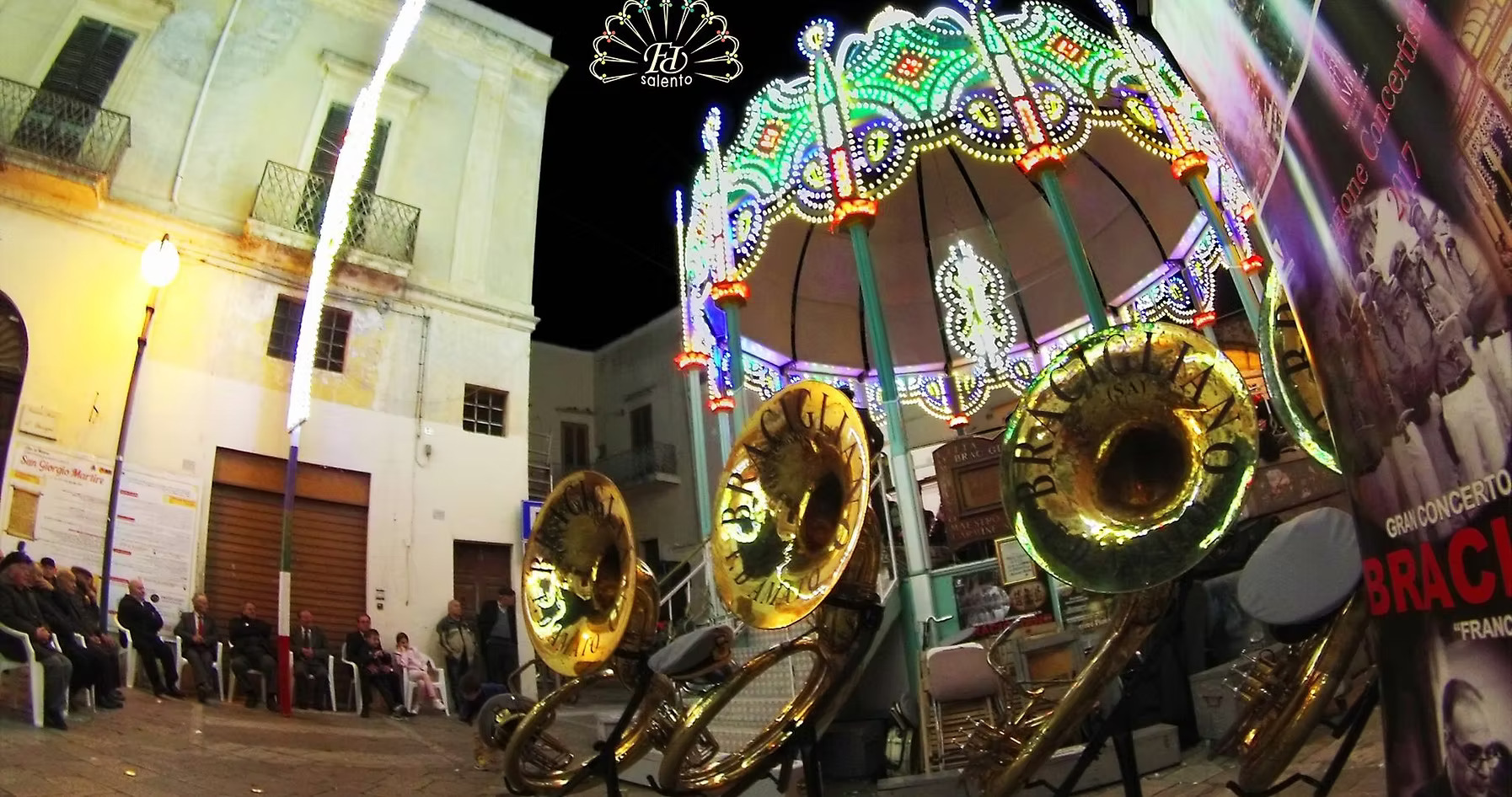
Matino Li, San Georgia [De Cagna Luminarie, n.d.]
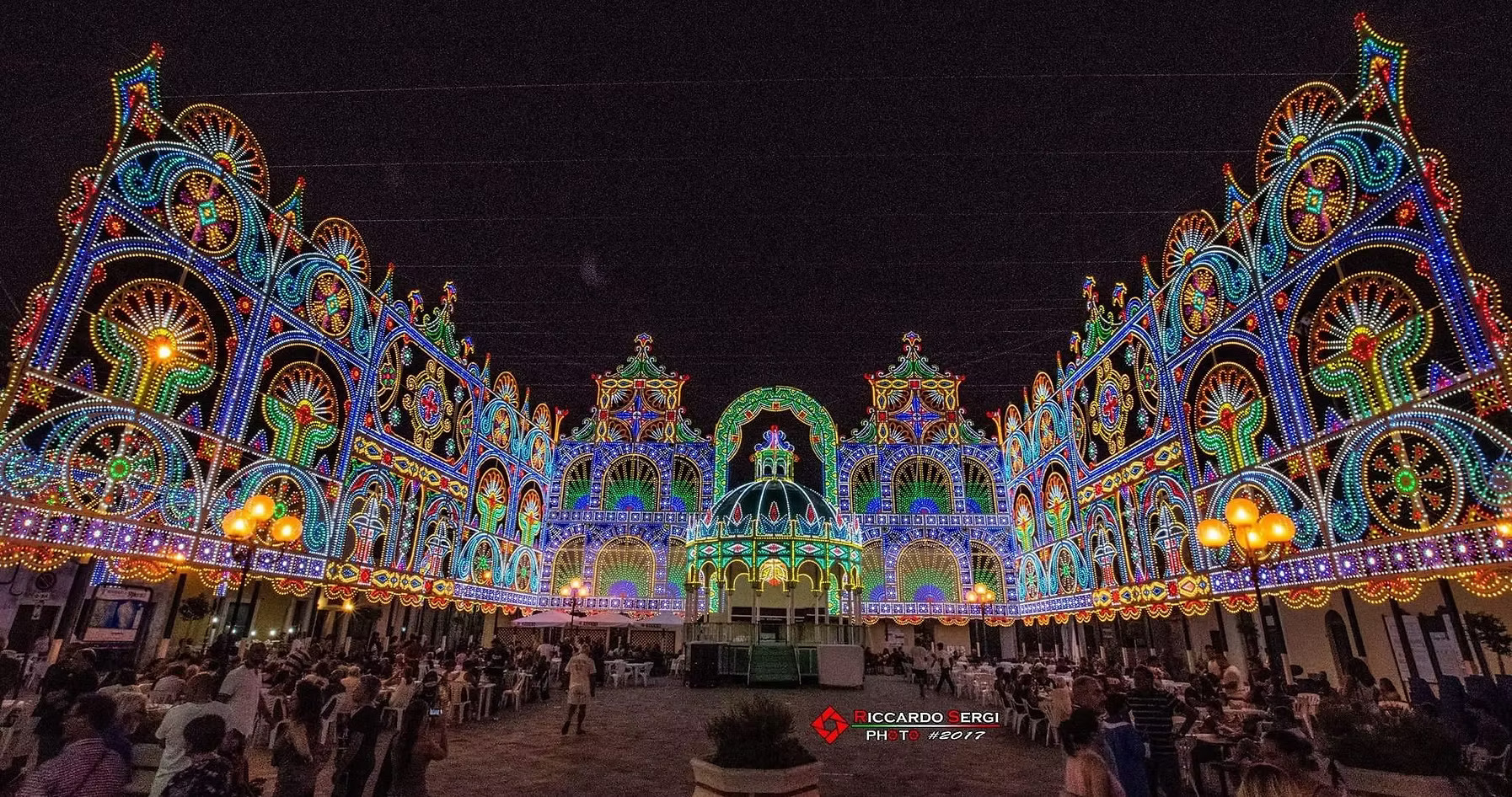
Ricardo Gergi, Phat [De Cagna Luminarie, n.d.]
Contemporary Light Artists
Finally we come to the contemporary period (1945-present) [Wikipedia contributors, 2025] highlighting works of famous light artist like Dan Flavin. More than the other period, early contemporary artists began working with pure light as the sole medium.
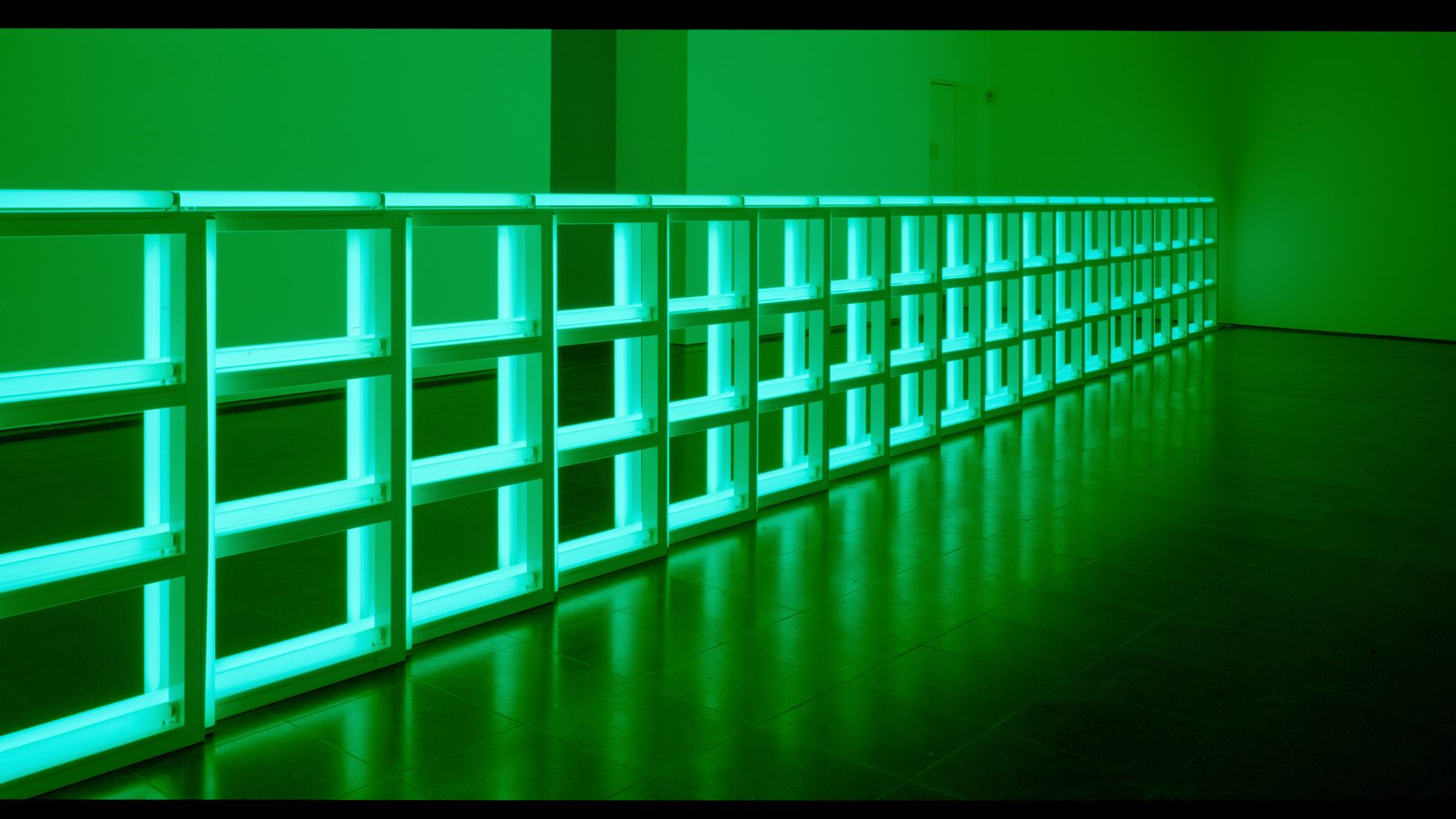
Dan Flavin Installation view from the exhibition (2022), Serpentine Gallery, London
Dan Flavin is one of the most famous contemporary light artists. Although there are some permanent exhibits of his art around the world many of his works are usually installed temporarily such as the piece above in London in 2021 [Wolfe, 2023].

Stepan Ryabchenko, Blessing Hand (2019) Saatchi Gallery, London
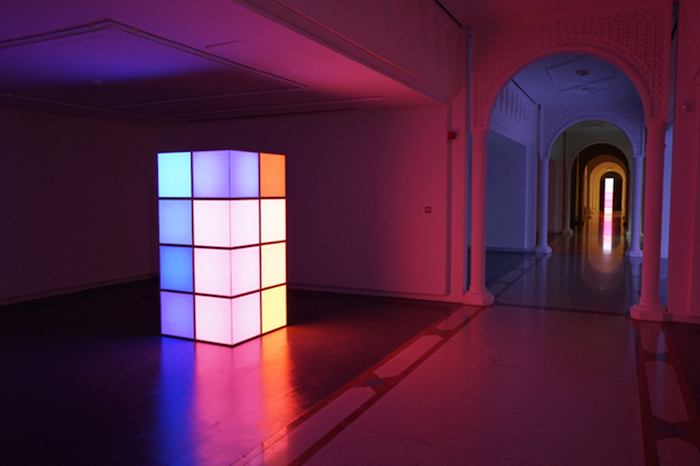
Angela Bullock, Considering Dynamics and Forms of Chaos (2016) Sharjah Art Museum, United Arab Emirates
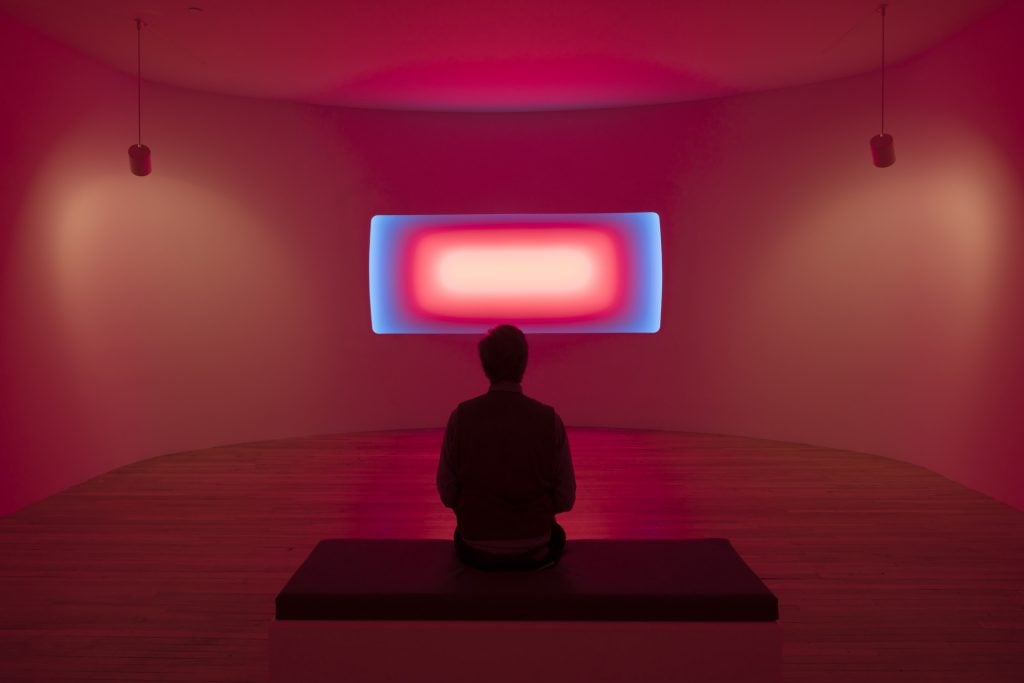
James Turrell, Dissolve Curved Wide Glass, (2017), Collection of Hudson C. Lee
Duchamp and The Secret Light
To end this post I include one of the most famous and controversial avant-garde modern artists: Marcel Duchamp. Duchamp (1887–1968) was a French-American artist best known for challenging traditional notions of art. In 1917, he famously submitted a urinal titled Fountain to an art exhibition under a pseudonym, launching the concept of the “readymade”—ordinary objects turned into art simply by being chosen by the artist. Duchamp’s irreverence and intellect laid the groundwork for later conceptual art and movements like Pop and Minimalism. [Marcel Duchamp Art, Bio, Ideas, n.d.][Cain, 2017].
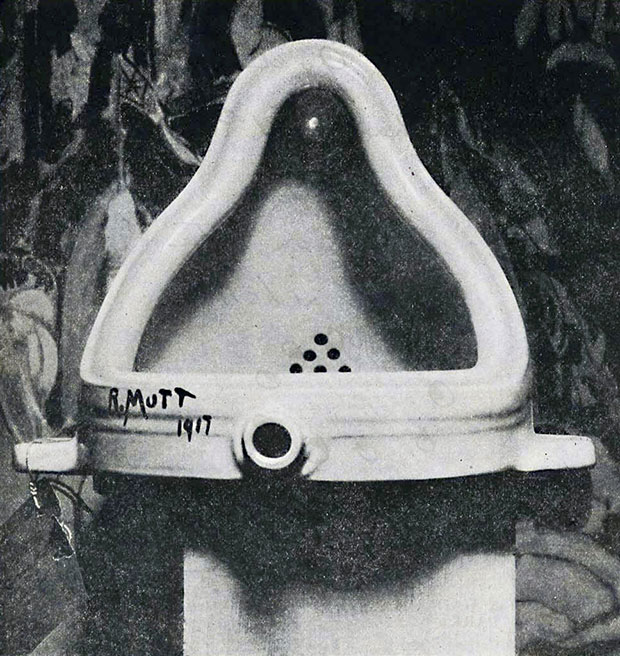
Marcel Duchamp The Original Fountain (1917) [Lost]
Duchamp is my favourite artist for a reason. He was, in the art world and beyond, an extreme iconoclast. I never get tired of looking at the dramatic and radical ways he approached art. But the most fascinated story of Duchamp, and why he is included in my light blog is because of the last work of art he ever created, which he worked on in secret for 25 years before it was displayed after his death [Cain, 2017].
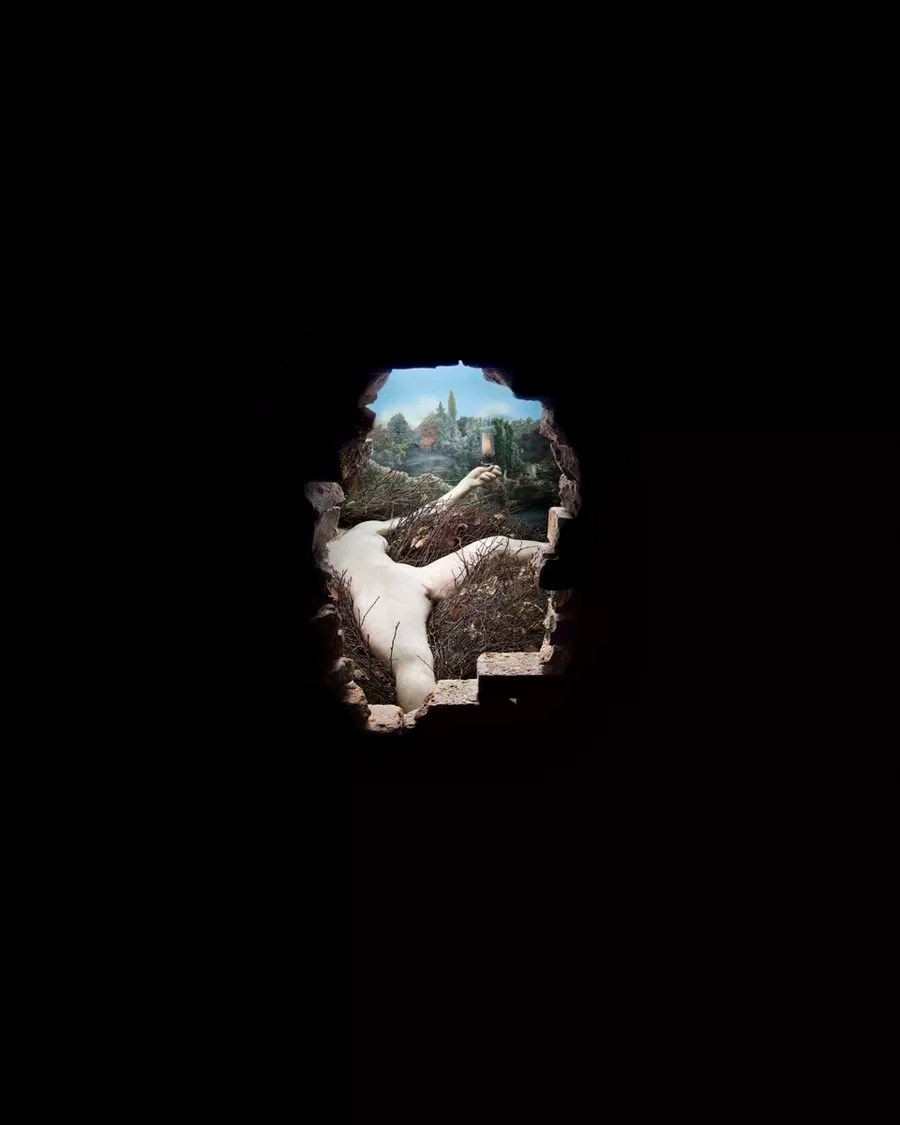
Marcel Duchamp, Étant donnés: 1° la chute d’eau, 2° le gaz d’éclairage (1968) Philadelphia Museum of Art.
Étant donnés: 1° la chute d’eau, 2° le gaz d’éclairage is what I consider to be pure light art. Assembled first at the Museum of Modern Art in New York and then moved after his death to the Philadelphia Museum of Modern Art, the piece has never ceased to inspire, intrigue and fascinate the art-going world. [Cain, 2017].
In order to view the piece the viewer steps inside a small ante-way or shed, and the door closed behind them so they are left in complete darkness.
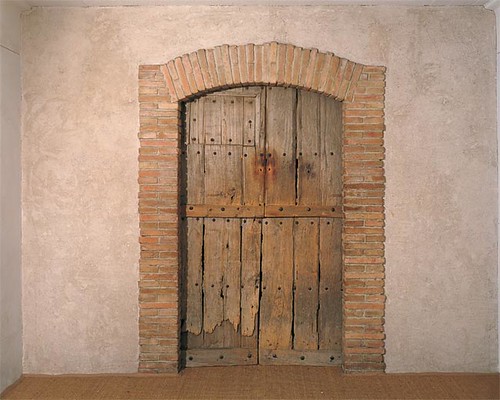
Marcel Duchamp, Installation view of Étant: 1° la chute d’eau, 2° le gaz d’éclairage (1968) Philadelphia Museum of Art
Through a small keyhole in the far wall one peeks through into Duchamp’s heavily lighted a scene—a forest scene with a naked woman lying on the ground holding up a glass lantern.

Marcel Duchamp, Installation View of Étant donnés: 1° la chute d’eau, 2° le gaz d’éclairage (1968), Philadelphia Museum of Art.
It never pays to try and figure out the meanings of Duchamp’s art. The shocking spectacle of a nude woman in a forest with a lamp makes little coherent sense to most viewers. But what makes this as much light art as any of the pieces above is that the effect is obtained by the viewer kneeling a dark room peeking through the small hole into this bizarre, fantastical and lighted world. The key medium for this work is not the figure made of rubber or the painted forest, but the world of voyeurism—a sneak peek from the darkness into the strange lighted reality within.
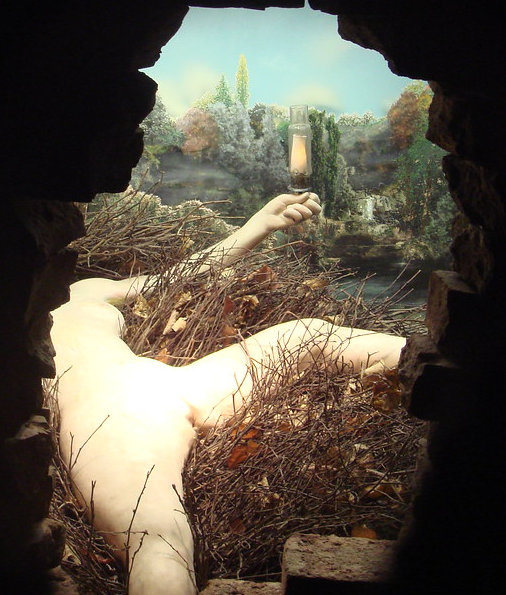
Marcel Duchamp, Étant donnés: 1° la chute d’eau, 2° le gaz d’éclairage (1968) Philadelphia Museum of Art.
Conclusion
So that’s it for my blog post on light art. I hope you enjoyed it, and will investigate more light art on your own. The pieces here are just a fraction of the light art available in the world and posted on the Internet. If you’re like me you’ll spend hours and hours looking at the beautiful world of light presented to us by these artists. Even if you think most art is boring. Even if you really do think it could be done by a child.
References
1. Wikipedia contributors. (2024, November 6). Light art. Wikipedia. https://en.wikipedia.org/wiki/Light_art#
2. Wikipedia contributors. (2025a, March 22). Renaissance – Wikipedia. https://en.wikipedia.org/wiki/Renaissance
3. Wikipedia contributors. (2025d, April 5). Rococo. Wikipedia. https://en.wikipedia.org/wiki/Rococo
4. Neo-classicism and the French Revolution. (n.d.). Oxford Art Online. https://www.oxfordartonline.com/page/1625
5. Wikipedia contributors. (2025, March 31). Age of enlightenment. Wikipedia. https://en.wikipedia.org/wiki/Age_of_Enlightenment
6. Wikipedia contributors. (2025a, March 17). Impressionism – Wikipedia. https://en.wikipedia.org/wiki/Impressionism
7. Wikipedia contributors. (2025a, March 30). Vincent van Gogh. Wikipedia. https://en.wikipedia.org/wiki/Vincent_van_Gogh
8. admin_gid. (2021, December 22). Festival “Circle of Light” September 2022 – Travel Russia Guide. Travel Russia Guide -. https://russiaeguide.com/festival-circle-of-light.html
9. Luminarie, De Cagna Luminarie, Italia. (n.d.). http://www.decagna.com. https://www.decagna.com/luminarie?lang=en
10. Wikipedia contributors. (2025). Contemporary art. Wikipedia. https://en.wikipedia.org/wiki/Contemporary_art
11. Wolfe, S. (2023, February 14). Dan Flavin – pioneer of minimalism through light. Artland Magazine. https://magazine.artland.com/dan-flavin-pioneer-of-minimalism-through-light/
12. Cain, A. (2017, November 14). Duchamp’s last work may hold one final secret. Artsy. https://www.artsy.net/article/artsy-editorial-duchamps-work-hold-one-final-secret
13. Marcel Duchamp Art, bio, ideas. (n.d.). The Art Story. https://www.theartstory.org/artist/duchamp-marcel/

 darrengreer
Leave a comment